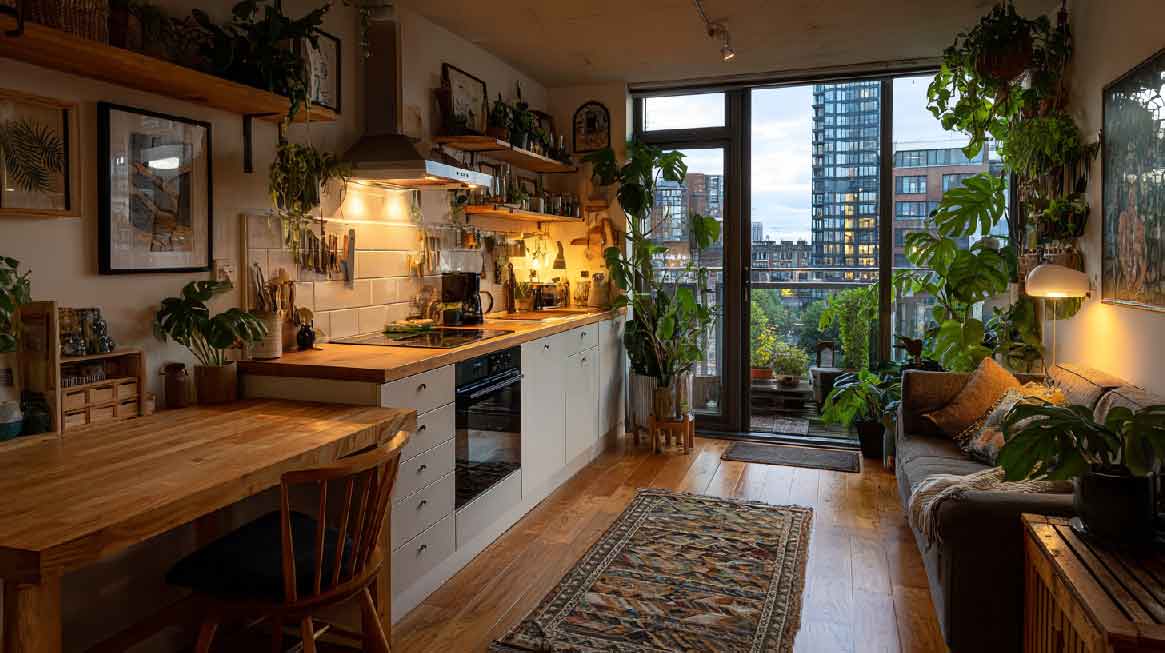
A daily cleaning routine for a busy London home takes 15 to 20 minutes: about 5 minutes in the morning and 10 to 15 in the evening. It deals with four things only: food mess, water in the bathroom, steam and condensation, and clutter. It is not a full clean. Its job is to keep your weekly clean short.
What should a daily cleaning routine cover?
Only the mess that gets worse overnight. Food left out dries hard and attracts pests, water left on glass and taps turns into limescale, trapped steam leads to condensation and mould, and clutter on a surface stops you cleaning it at all.
Everything else, such as dusting, mopping and changing the beds, can wait for the week. Trying to do those every day is where most routines fail, because 20 minutes turns into an hour and the habit is gone by Thursday. Our weekly cleaning checklist covers that layer room by room.
What is the 5-minute morning routine?
- Squeegee the shower (1 minute). Run a squeegee down the screen and tiles straight after your shower, then dry the tap with a cloth. Thames Water's hard water page calls all of the water in its region hard. Drops left to dry on glass are what turn into limescale. If the screen is already crusted, start with our limescale removal guide.
- Clear the steam (no extra time). Leave the extractor fan running, or open the window wide and close it again once the air has cleared. That is what government guidance on damp and mould recommends after a bath or shower. In a windowless bathroom, the fan is the only way out for the steam.
- Make the bed (1 minute). It makes the whole room look finished.
- Breakfast things away (2 minutes). Rinse and load the dishwasher, or wash up, and wipe the patch of worktop you used.
- Put one thing back (1 minute). The coat on the chair, the shoes in the hall or yesterday's post.
What is the 10 to 15-minute evening routine?
The first two steps happen while you cook, so they add almost no time.
- Cook with lids on and the fan running. Covering pans and using the extractor fan are both on the government damp guidance list, and in a small flat they keep steam off the windows and walls. Close the kitchen door while you cook, if you have one.
- Clean as you cook. Wash the chopping board and knives while dinner simmers. The Food Standards Agency advises washing chopping boards soon after preparing raw food (FSA).
- Leftovers into the fridge. Cover them, write the day on the lid, and follow the FSA advice to eat leftovers within 48 hours or freeze them (FSA).
- Empty sink, clean hob (5 minutes). Wash up or run the dishwasher, then wipe the worktops, the sink and the hob once it has cooled. Going to bed with an empty sink changes how the kitchen looks the next morning more than any other habit.
- Bin check (1 minute). If the bin or food caddy is full or starting to smell, take it out, then wash your hands.
- Five-minute tidy. Walk through the home with a basket and return anything that is out of place. Stop when the timer goes, finished or not. If the basket is full every night, the problem is too much stuff rather than too little tidying, and our guide to decluttering a small London flat will help.
- Crumb patrol (2 minutes). Run a cordless or handheld vacuum under the table, around the sofa and along the kitchen floor.
How do you adapt the routine to the way you live?
If you commute
If you leave at 7.30am and get home after 7pm, keep the morning to the shower squeegee and the bed, and do the dishes the night before so you wake up to an empty sink. Fit the evening steps around cooking.
If you work from home
Working from home means more lunches, more mugs and more steam from cooking and the kettle. Add a 3-minute lunch reset: plate and mug washed, worktop wiped. Clear the desk at the end of the working day, so the work corner of a small flat turns back into living space.
Laundry is the other issue. The government damp guidance recommends drying clothes outdoors where possible. In a flat without a balcony or garden, dry them in one room with the door closed and a window open, rather than spreading them across the whole home.
If you share a flat
In a flat-share, the daily routine works best as a few house rules that everyone agrees. Three rules prevent most arguments:
- wash, dry and put away your own dishes on the day you use them;
- leave the bathroom as you found it: squeegee the screen, wipe the basin and take your things back to your room;
- keep shared worktops clear of personal appliances, shopping and parcels.
Bigger shared jobs, such as mopping and the full bathroom clean, need a rota, and the weekly checklist shows how to split one.
What do you need to keep the routine fast?
A routine is only quick if the tools are already where you use them. You do not need anything special:
- a squeegee hanging in the shower and a cloth by the bathroom basin;
- a multi-surface spray and microfibre cloths under the kitchen sink, in a different colour from the bathroom cloths so they never swap rooms;
- a cordless or handheld vacuum kept charged in a hallway cupboard;
- a basket or tote bag for the evening tidy;
- spare bin liners stored in the bottom of the bin, under the one in use.
For worktops, the FSA says cleaning with warm, soapy water or a disinfectant cleaning product removes harmful bacteria (FSA student guide).
How do you make the routine stick?
- Attach it to something you already do. Squeegee while the shower drains, wipe the hob while the kettle boils, and tidy before you sit down for the evening.
- Use a timer. Stopping at 15 minutes, done or not, is what makes the routine repeatable.
- Never catch up. If you miss a day, do tonight's routine only. Doubling up turns a habit into a chore.
- Give each person a step. In a couple or a family, one person takes the dishes and hob, another the tidy and the floor.
When is a daily routine not enough?
If you keep the routine going and the home still feels dirty by the weekend, the gap is in the weekly layer, not the daily one. Typical signs are limescale the squeegee no longer shifts, a hob that stays grimy despite daily wipes, and dust on every surface you touch.
There are two fixes. One is a regular cleaner who takes the weekly jobs, leaving you with the 15 minutes a day. SW Clean London's home cleaning is £17 an hour for weekly or fortnightly visits, with a 2-hour minimum and the same cleaner each time. The other is a one-off deep clean to clear the build-up, so your routine has a clean base to protect.
Frequently asked questions
What should you clean every day?
The dishes, the kitchen sink, the worktops and hob you used, and the shower or bath after use. Add a quick tidy of shared surfaces and a check of the kitchen floor for crumbs. These are the places where mess hardens, smells or adds to damp if it is left overnight. Dusting, mopping and changing the bedding all work well once a week.
Is it better to clean a little every day or all at once?
For most busy households, a little every day works better. Fifteen minutes stops grease, limescale and crumbs building up, so the weekly clean is lighter work. One long session suits people with a fixed free morning, but when it slips by a week, everything is harder to shift. Choose the system you will still be following in three months.
How do you keep a flat clean when you work long hours?
Cut the routine to the three steps with the biggest effect: an empty sink before bed, a squeegee after every shower and a five-minute tidy. Then move the weekly jobs off your plate, either to a weekend slot you protect or to a regular cleaner. Our visits run from 8am to 8pm on any day of the week, so the cleaner can come while you are at work.
Want the weekly jobs done for you? Book a regular cleaner online and keep your 15 minutes a day for the rest.